Handyman and Property Care on Blakely Island
Blakely is a private fly-in and boat-in community wrapped around a runway, a marina, and a lot of very tall trees. The trees are what keep me busy there.
- Licensed & bonded
- WA L&I #SANJUJI741OT
- Insured
- Locally owned in Friday Harbor
Arriving at Blakely
Everything on Blakely happens at the northwest tip. The marina is there, the fuel dock is there, the general store and cafe are there, and past the marina property there is no public access at all — the island is privately owned and it is genuinely private. That makes the logistics simple in one sense: I know exactly where I am tying up. It also means I need your name and your lot before I come, because a contractor turning up at the marina without a reason to be there is a contractor who gets turned around.
From Friday Harbor it is around eight nautical miles direct and more like eleven or twelve as run, out through Upright Channel and across toward Peavine Pass. Call it forty-five minutes in decent water. The fuel dock at the marina is open daily, which is a small mercy that not every island on this list offers.
Blakely also has something no other non-ferry island in the county has: a paved, lighted private airstrip with a parallel taxiway, owned and run by the Blakely Island Maintenance Commission for property owners. The community was platted in the mid-1950s as San Juan Aviation and Yachting Estates, and the commission counts roughly 137 homes and undeveloped lots. If your parcel is up by the strip rather than down by the water, say so — the walk and the cart route from the dock change how much I can carry in one trip.
Heavily forested, two lakes, and what that does to a house
Blakely is hilly, thickly forested, and holds two freshwater lakes in the middle of it — Horseshoe and Spencer — with Spencer Creek running down to Thatcher Bay. Seattle Pacific University has run a large biological field station on the island for decades, which tells you something about how much intact forest is left. Beautiful place. Hard on buildings.
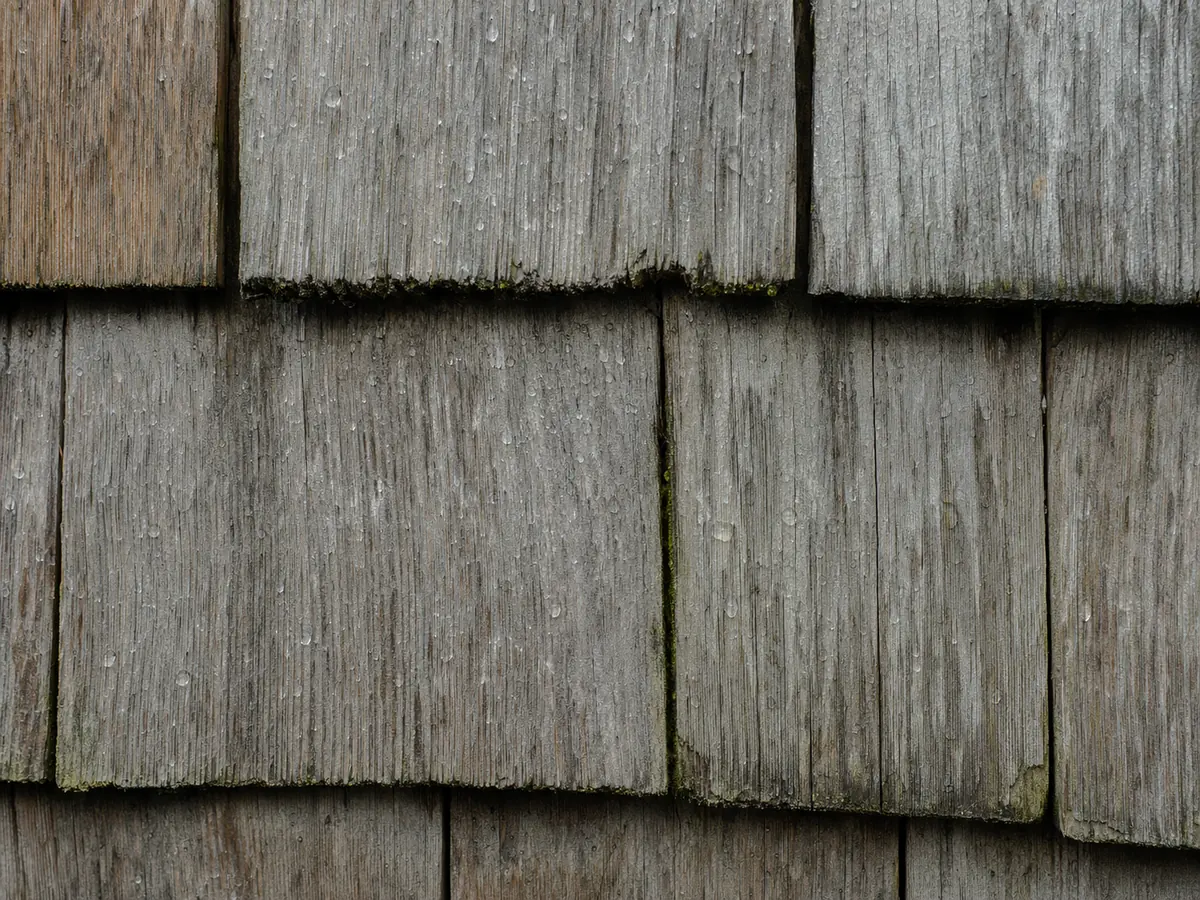
Under that kind of canopy the failure mode is not sun and salt, it is moisture that never gets a chance to leave. Roofs on the north and east slopes grow moss into the shingle edges and hold it. Gutters do not just fill with needles, they pack solid and then freeze. Decks under trees stay damp from October to May, so the boards go slick and green and the fasteners work loose from repeated swelling. Siding on the shaded elevation mildews. Window and door casings hold water at the sill and the paint film fails from behind. Crawlspace vents block with needle litter and duff, so the space stops drying out.
Practically, that means my Blakely days are usually a stack of the same four or five jobs: clear the gutters and treat the moss, soft-wash the shaded siding and the deck, re-fasten and re-coat what the damp has loosened, and go around the doors and windows that swelled shut over winter. None of it is dramatic. All of it is cheaper than what happens if it waits three years.
An island of second homes with a marina in front of it
County planning figures put roughly 150 dwelling units on Blakely against about 30 occupied year-round, with a population near 62 — the numbers in the San Juan County comprehensive plan appendix, which pairs 2000 census occupancy with a 2005 unit count. They are dated and I am not presenting them as current. As a ratio, though, they match what the island looks like: four out of five houses closed up for most of the year.
The specific risk on Blakely is that the damage is slow and invisible from a boat. A house here can look completely fine from the marina and be quietly rotting a fascia board on the back side. Owners who come out in July see a house that presents well in July. What I would rather do is walk it in November and again in February, when the gutters are the problem and the deck is the problem and there is still time to act.
That is the case for standing property care here rather than one-off calls. It also spreads the boat cost: a scheduled visit that catches three small things beats three separate crossings later, and the boat day can be shared with your neighbors on the island the same day.
The honest material limit for Blakely
My boat is a 16-foot skiff. It carries me, my tools, and small materials, and 20 feet is the honest ceiling on board length. On a forested island where most of my work is maintenance, that is usually enough — moss treatment, fasteners, a few replacement boards, paint, hardware, screen stock, and a full day of tools. What it will not do is a re-deck, a re-side, sheet goods in quantity, or carrying out volume debris. The good news for Blakely is that the marina end has real freight access, so when a job needs a barge, we book one and I work off what lands. The bad news is that a project needing lumber will never be cheap here, and I would rather say that on the phone than in an invoice.
Questions I get about Blakely
Do I need to clear you with the maintenance commission first?
Usually, yes. Blakely has no public access past the marina property, so I want your name, your lot, and whatever the Blakely Island Maintenance Commission requires for a contractor visit before I come over.
What is the most useful thing to book on Blakely?
Gutters and roof moss, twice a year, plus a soft wash of the shaded elevations. Under that much tree cover it is the work that prevents the expensive repairs.
Can you fly in instead of taking the boat?
No. The airstrip is for property owners, not for contractors turning up with a tool bag. I come by water and the boat day rate reflects that.
Next step
Work waiting on Blakely?
Send me the list and where I land, and I’ll quote the boat day before anything is booked. Call (360) 317-0203.
Related