Handyman and Property Care on Henry Island
Henry sits right off Roche Harbor, which makes it one of the two easiest islands on this list for me to reach — I drive across San Juan and cross from there.
- Licensed & bonded
- WA L&I #SANJUJI741OT
- Insured
- Locally owned in Friday Harbor
A short crossing from Roche Harbor
Henry wraps the west and south sides of Roche Harbor, with Pearl Island closing the north side. That geography is why Henry is easy for me: instead of a long open-water run from Friday Harbor, I drive the half hour across San Juan Island to Roche and cross from there. It is the same move Henry owners make themselves — park at Roche, load the boat, ten or fifteen minutes across the bay to the island dock, then a golf cart from the dock to the house.
The catch is Mosquito Pass. The channel between Henry and San Juan runs current and collects boat wake all summer, and the shallow, narrow part of it deserves respect in a small boat with a load of tools aboard. It is not a hard crossing, it is just one you plan rather than improvise.
Henry is shaped roughly like an H, with a low beach isthmus joining the two lobes. The Seattle Yacht Club maintains an outstation on the island, and the San Juan Preservation Trust holds the Mosquito Pass Preserve on the east side, with a beach and trails, acquired in 2007. Everything else is private, home to a small number of permanent residents and a larger number of owners who are here seasonally.
Cabins, big water views, and a lot of salt
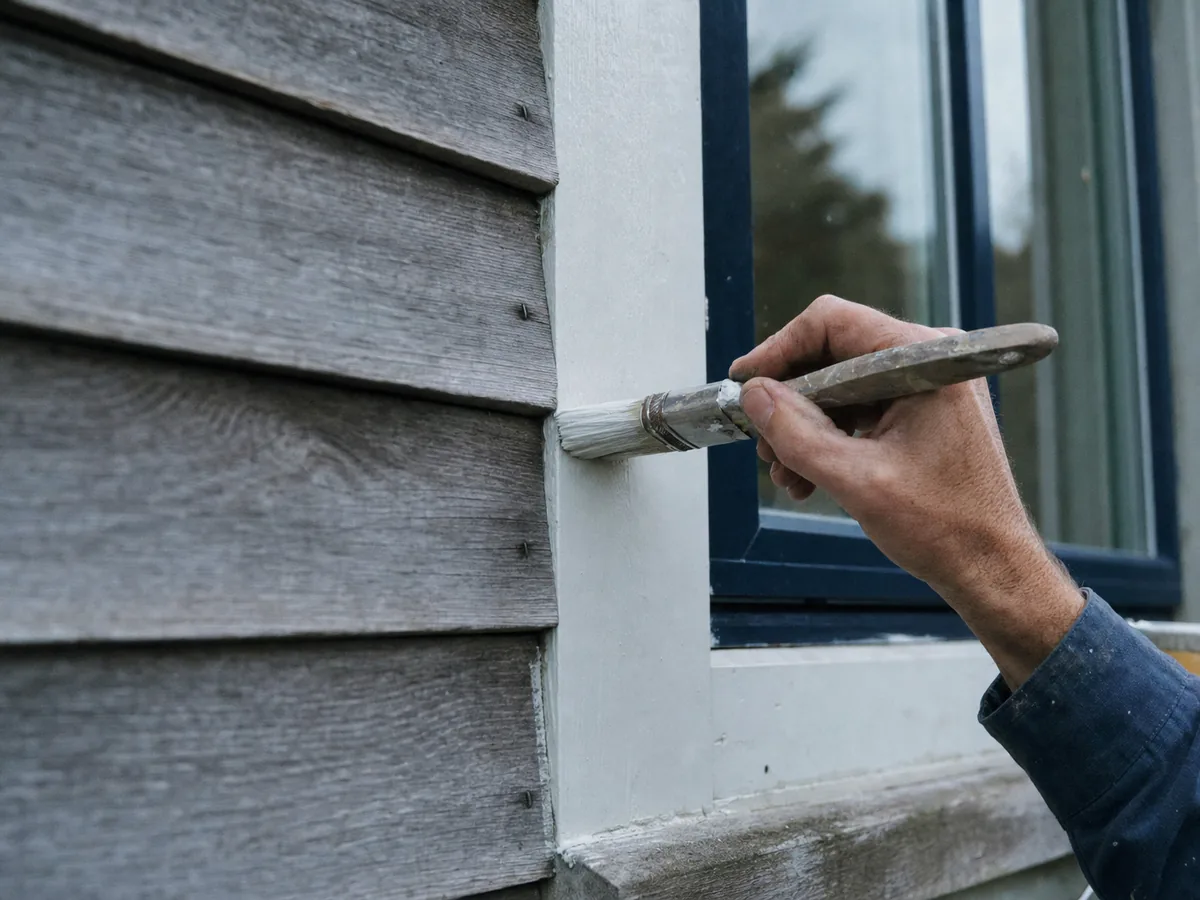
Henry's building stock runs from old family cabins to substantial waterfront houses, and nearly all of it is oriented at water on at least two sides. The island is narrow, so almost no house on it is sheltered from salt air the way an inland house on San Juan is. That is the defining maintenance fact here.
What it produces: white bloom and corrosion on exterior hardware within a season or two of installation, hinge pins and latch mechanisms that stop working smoothly, screen frames pitting, light fixtures and vents corroding at the fasteners, and paint or stain on the weather elevation failing years earlier than the manufacturer's number. Salt film builds on siding and glass, and washing it off periodically is genuinely preventive rather than cosmetic — that is most of what a soft wash is for on an island like this.
Then there is the shade side of it. Henry has heavy tree cover on the interior, and deer that keep the understory grazed but do nothing about roof moss. So a typical Henry house has one set of problems facing the water and another facing the woods, and the punch list I get handed usually contains both: rehang a door that no longer closes, replace corroded hardware throughout, refasten a section of deck, wash the siding, clear the gutters, patch trim where the paint let water in.
Empty houses next door to a busy resort
Henry is not broken out separately in the county's per-island dwelling-unit table, so I am not going to quote a number for it. What I can say from the ground is that the pattern here matches the rest of the non-ferry islands: a handful of full-time residents and a majority of houses that are used seasonally, with owners arriving from Seattle and elsewhere for weeks rather than months.
The odd thing about Henry is the proximity. Your empty house is a ten-minute boat ride from one of the busiest marinas in the county, and that closeness makes it easy to assume someone is keeping an eye on things. Nobody is. Roche Harbor is not watching your crawlspace.
This is where property care and home watch earns its keep, and Henry is a good island for it because the crossing is short and predictable. A monthly walk-through with photographs, gutters cleared before the fall rain, hardware serviced before it seizes, and the house opened and closed properly at each end of the season is a modest standing cost that prevents the two or three expensive surprises that otherwise define owning out here.
Material limits on Henry
My boat is a 16-foot skiff. It carries me, my tools, and small materials, and 20 feet is the honest ceiling on board length. Henry has the advantage that I load at Roche Harbor rather than Friday Harbor, so a run to a supplier and a run to the boat are the same trip and the crossing is short. That makes small-material work efficient here. It does not change the ceiling: no decking loads, no sheet goods in quantity, no windows or doors in bulk, no appliances, and no volume debris coming out. The dock is shared and the cart route from it is not built for pallets. When a job is bigger than that, it needs a barge, and I will help you organize it rather than make six trips in a skiff.
Rates, including the flat all-in boat day, are on the pricing page. Because the Henry crossing is short, a shared day between two owners on the island goes a long way.
Questions I get about Henry
Do you launch from Friday Harbor or Roche Harbor?
Roche, for Henry. I drive across the island and cross the bay, which is a ten to fifteen minute run instead of an hour around the top of San Juan.
Why does hardware fail so fast on Henry?
The island is narrow and exposed on both sides, so nearly every elevation gets salt air. Hinges, latches, screens, and fasteners are the first casualties and the easiest thing to stay ahead of.
Can you meet a delivery at the dock for me?
Yes, if it is scheduled and the dock arrangement allows it. Coordinating freight and being there when it lands is a normal part of what I do on the boat-access islands.
Next step
Work waiting on Henry?
Send me the list and where I land, and I’ll quote the boat day before anything is booked. Call (360) 317-0203.
Related